
Shot Type
The Shot That Sells the Product Before Anyone Reads a Word
The hero shot is the statement image — the one at the top of the product page, the campaign visual, the image that has to carry the brand's ambition on its own. Where the packshot's job is accuracy, the hero shot's job is desire. It says 'this subject is special' through lighting, isolation and depth, not through claims. Most products get exactly one hero shot per campaign, which means this is the image where craft is most visible — and where slot-machine prompting is most obvious.
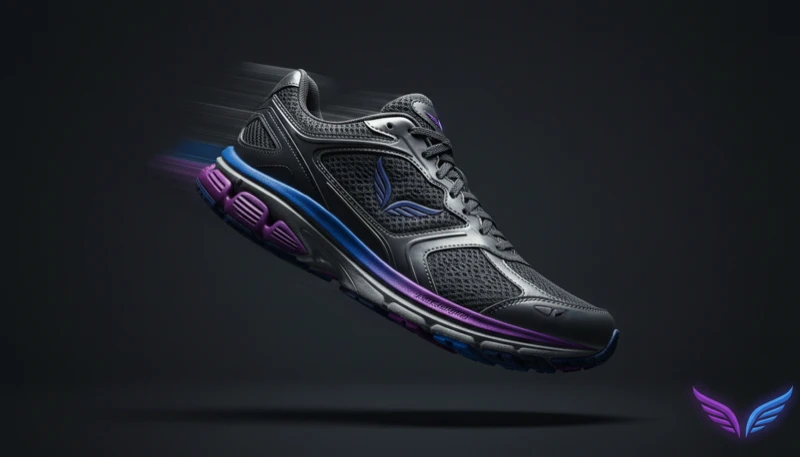
When to Use This Shot Type.
The first image on your own product page (marketplaces still want the white-background packshot first)
Campaign launches, homepage banners and landing page heroes where one image sets the tone
Top-of-funnel ads where you need a scroll-stopper that still looks premium, not clickbait
Email headers and lookbook covers for product drops
How Dezygn Creates These.
The hero shot has a known camera recipe, and Dezygn applies it instead of guessing. 85mm is the money-maker lens: it isolates the subject, compresses the background, and makes everything look slightly more expensive — it's what luxury brands actually use. Pair it with f/1.8-f/2.8 for the beautiful blur: creamy bokeh, isolated subject, everything feels elevated. Frame at a slight 3/4 angle — the most flattering, most professional default. For ultra-premium drama, step up to 135mm: extreme compression, magazine feel. Use it sparingly; it's a power move.
Style is editorial or moody: dramatic directional lighting, rich shadows, premium aesthetic. Scene stays minimal — a styled surface, a hint of environment, nothing competing with the subject. Think of AI attention like a budget: the hero shot spends almost all of it on the subject and the light.
Brand is the quiet ingredient that makes a hero shot feel like yours: exact hex colors in the palette, the right color temperature, one or two identity textures. 'Navy blue' means different things to different AIs. Your hex code means exactly one thing.
Pro Tips.
01
When in doubt for premium work, go 85mm
Out of dozens of focal lengths, three matter: 50mm feels honest, 85mm feels premium, 135mm feels cinematic. The hero shot almost always wants 85mm with shallow depth. If the image feels flat or 'catalog,' the lens choice is usually the culprit, not the styling.
02
Moody lighting needs a matte product
The single strong key light that makes moody hero shots cinematic also creates dark voids on reflective surfaces. If the product is glass, metal or polished acetate, keep the drama in the background and light the product itself with soft fill.
03
Front-load what matters in the prompt
The AI pays more attention to the beginning of your prompt than the end. If the brand's burgundy keeps coming out generic red, move the brand block to the top and repeat the critical detail. The default ingredient order works for most shots — you break it when something isn't coming through.
04
One hero, many crops
Compose with negative space so the same hero survives a 1:1 feed crop, a 9:16 story crop and a wide web banner. Generating the hero at the final aspect ratio always beats cropping after the fact — composition never survives the scissors.
Create Hero Shot Photography with AI.
Generate professional hero shot photography in minutes, not hours. Dezygn's AI understands composition, lighting, and brand consistency.
Start FreeRelated Shot Types.
Packshot Photography
The packshot is your product, isolated on a clean background, lit evenly, with nothing else in frame. It's the shot Amazon requires, every marketplace expects, and every product page is built on. It is also where AI photography most often falls apart — because the packshot is a pure accuracy test. There is no scene to hide behind. If the cap is the wrong material, if the label text is mangled, if the proportions are off, the customer sees it instantly. Accuracy is non-negotiable here: an embellished packshot doesn't just look bad, it generates 'item not as pictured' refunds.
Learn moreLifestyle Photography
A lifestyle shot places the product in a real-world context — a kitchen counter, a gym bag, a café table — and answers the question every shopper silently asks: 'what does this look like in my life?' It's the workhorse of ads and social because context creates desire in a way isolation can't. It's also the shot where amateurs one-shot everything ('woman in kitchen holding product, professional, beautiful') and get compromises on every element, because the AI has to solve for person, product, pose, environment and lighting simultaneously.
Learn moreBrand & Atmosphere Photography
Brand and atmosphere shots are the images where the product is secondary or absent entirely: the workshop, the coastline, the material in raw form, the place the brand comes from. They build the world the products live in. Commodity brands skip them; premium brands are made of them — because a customer who buys into a world pays world prices, and a customer comparing isolated products pays commodity prices. These shots are also the hardest to fake with generic prompting, because 'aesthetic background' isn't a world. A world is specific.
Learn more