
Shot Type
Engineered to Look Unengineered
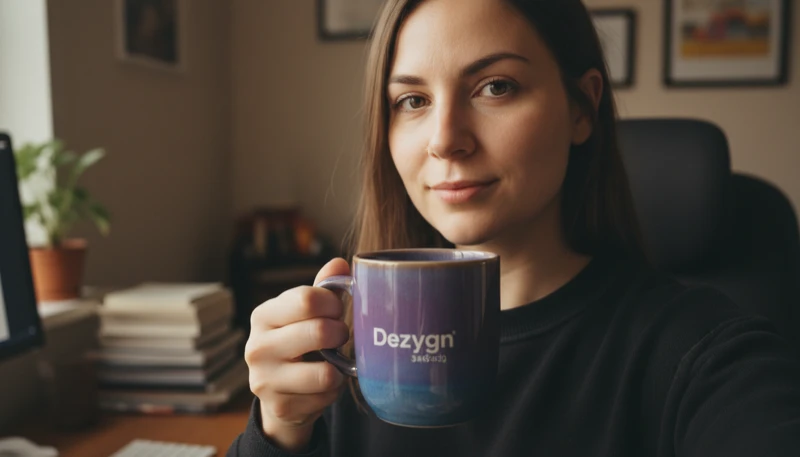
UGC-style shots imitate what a happy customer would post: iPhone aesthetic, imperfect lighting, candid framing, real-life clutter. In feeds and ad placements they routinely outperform polished studio work because they don't pattern-match to 'advertisement' — they pattern-match to 'person like me.' The paradox is that good UGC is deliberately engineered: the imperfection is specified, not accidental. Random sloppiness reads as low quality; designed authenticity reads as trust.
When to Use This Shot Type.
Meta and TikTok ad creative, where native-looking content beats studio polish and you need volume — fresh variations beat optimized single winners under Meta's current ranking
Review sections, email and organic social, where studio shots would feel out of place
Testing new angles cheaply: UGC variations are fast to produce and fast to read in the data
Brands whose buying trigger is relatability rather than aspiration
How Dezygn Creates These.
The UGC recipe inverts the usual rules on purpose. Style: 'authentic UGC photography, shot on iPhone, candid feel' — that phrase does heavy lifting. Scene: a real home environment with natural, slightly imperfect light; a bathroom counter beats a marble pedestal. Camera: 50mm-equivalent, deeper aperture around f/4, casual framing — selfie distance, slightly off-center, the kind of crop a person makes with one hand.
Action is the ingredient that makes UGC breathe: mid-application, mid-sip, caught-in-the-moment, gaze off-camera or into a mirror rather than locked on the lens. Candid interaction reads authentic; posed presentation reads like an ad wearing a costume.
The one thing that never goes casual is the Subject. The product photo is still the real product, transferred accurately — label legible, proportions true. Authenticity in the styling, accuracy in the product. People can smell AI from a mile away now, and when they smell it, they close their wallet — the UGC frame only works if the product in it is unmistakably real.
Pro Tips.
01
Specify the imperfection
Don't hope for authentic — direct it: 'natural imperfect lighting,' 'candid bathroom selfie,' 'slightly off-center framing.' If you leave authenticity to chance, you get either studio gloss or unusable mess. The imperfections are ingredients.
02
Make volume your strategy
UGC is the format where creative fatigue bites fastest and where testing pays best. Produce batches — different models, rooms, times of day, hooks — and let the ad account tell you which 'person' your customers believe. One UGC winner repeated for a month dies; ten variants rotating don't.
03
Keep the gaze off the camera (usually)
Looking at the product or into a mirror reads candid. Direct eye contact reads like a presenter. Save to-camera gaze for testimonial-style frames where the 'creator' is talking to you.
04
Casual scene, accurate product
The cluttered counter can be generated; the product cannot. Always anchor the product with its real photo so the label, colors and shape survive the casual treatment. A relatable photo of the wrong product is a refund with good engagement. Carry that same product accuracy into hero shots when the campaign needs a polished statement image.
Create UGC-Style Photography with AI.
Generate professional ugc-style photography in minutes, not hours. Dezygn's AI understands composition, lighting, and brand consistency.
Start FreeRelated Shot Types.
Model Shot Photography
Model shots put the product on a person — worn, held, used. For entire categories they aren't optional: eyewear, jewelry and apparel barely sell without a face or a body in frame, because fit is the purchase question. The professional standard is the dedicated model: one consistent, brand-matched face that appears across the whole campaign, so your store doesn't look like it hired a different person for every photo. The amateur standard is whatever face the slot machine spits out today.
Learn moreLifestyle Photography
A lifestyle shot places the product in a real-world context — a kitchen counter, a gym bag, a café table — and answers the question every shopper silently asks: 'what does this look like in my life?' It's the workhorse of ads and social because context creates desire in a way isolation can't. It's also the shot where amateurs one-shot everything ('woman in kitchen holding product, professional, beautiful') and get compromises on every element, because the AI has to solve for person, product, pose, environment and lighting simultaneously.
Learn morePaparazzi-Style Photography
The paparazzi shot stages a stolen moment: hard direct flash, candid framing, a subject who looks photographed against their will — and glamorous because of it. It borrows the visual grammar of celebrity culture to make a product feel famous by association. Fashion and eyewear brands have used the format for decades because it solves aspiration differently than the polished hero shot: instead of 'this is beautiful,' it says 'people who matter wear this.' It's a niche tool with a strong flavor — wrong for calm minimalist brands, lethal in the right campaign.
Learn more