
Use Case
If the Pendant Is 2cm, It Must Look 2cm
Jewelry is the category where photography most often over-promises — and where 'smaller than expected' returns eat margins. Accurate scale, honest metal, real sparkle: that's an engineering problem, and it's solvable.
The Challenge.
Jewelry photography lies about size by default. Macro lenses make a 2cm pendant fill the frame like a chandelier, the customer orders, and the unboxing is a disappointment with a return label. In a category with high price-per-gram and emotional purchases, scale dishonesty is the most expensive image mistake you can make.
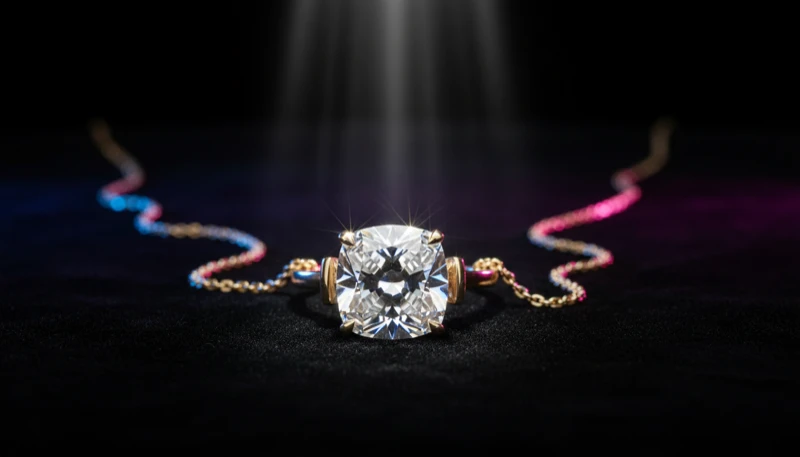
Then there's the metal. Polished gold and silver are mirrors; stones are lenses. Traditional jewelry photography is a specialist craft of controlled reflections — and naive AI generation produces metal that looks like plastic and stones with physically impossible sparkle. Customers can't articulate what's wrong, but they feel it, and they don't buy.
And jewelry needs people. Scale on a body — the chain at a real neckline, the ring on a real hand — is both the size-reference shot and the aspiration shot. Hands and skin are exactly where cheap AI work falls apart.
How Dezygn Solves This.
One of the first paid projects from our own outreach system was a $2,000 jewelry engagement that started with a single custom lifestyle image sent cold. The workflow it ran on is the one built into Dezygn. Scale is handled as data, not vibes: dimensions documented in product prep ('16-18 inch chain,' 'ring size 7,' 'stone carat weight') and stated in the subject block, with hands and faces as universal scale anchors at honest 50mm perspective for the size-reference image. Metal gets the reflective-material rule learned on client eyewear and metal work: soft multi-directional studio lighting with fill — never single-direction dramatic light, which buries reflective surfaces in black voids. Specify the metal precisely (14K yellow gold, sterling .925, brushed vs. polished) because finish determines how light behaves. For the hero set, the premium recipe — 85mm, f/1.8, controlled studio — earns the luxury read, and macro detail shots prove the setting work and stone quality that justify the price.
Honest Scale by Default
Documented dimensions plus hand and face anchors at natural perspective — the 'how big is it really' image that prevents the most common jewelry return.
Metal That Reads as Metal
Soft multi-directional lighting with fill keeps gold, silver and platinum readable — controlled reflections instead of plastic shine or black voids.
Macro Proof of Craft
Settings, prongs, pavé and engraving at close-up — the quality-proof shots that close consideration-stage buyers on premium pieces.
On-Body Without the Model Bill
Brand-matched dedicated models wearing your actual pieces, composited from clean portraits so necklines, ears and hands render right.
Collection Consistency
One locked recipe across the line — every piece in identical light and shadow, so the collection page looks curated, not aggregated.
$2,000
Real jewelry project landed with one cold proof image
50mm
Honest-perspective lens for the scale-truth shot
85mm f/1.8
The premium hero recipe luxury brands use
Related Use Cases.
Eyewear
Eyewear is our most documented client category — premium frame brands on monthly retainer. Model shots are the conversion driver, fit accuracy is the craft, and we learned both the expensive way so you don't have to.
Fashion & Accessories
Bags, eyewear, scarves, jewelry, outerwear — accessories are AI photography's sweet spot. Garment fit is the honest frontier. We work both, from real client campaigns.
Beauty & Cosmetics
No category consumes more creative or scrutinizes it harder. Consistent models, honest skin texture, true-to-tube shades — at the publishing cadence beauty demands.